Transylvania with Limosa Holidays

This year Transylvania showed again a very nice face to “Birds & Brown Bears tour participants. The weather was a bit hot for the season with +30 degrees Celsius maximum day temperatures. Seemed the summer arrived almost immediately in the beginning of May, after a short and rainy spring in April.

First full day were spent in a very nice Southeastern valley of the Ghiurghiu Mountains, an old coniferous woodlands where targets appears in a row. The show starts with an obliging pair of Three-toed Woodpecker which allowed close and prolonged scope view, than fallowed with a singing Firecrest, Crested Tit, a friendly pair of Nutcracker and finished with a pair of Black Woodpecker.

Male Three-toed Woodpecker  (Photo: János Oláh)

Firecrest  (Photo: János Oláh)

Eurasian Nutcracker (Photo. János Oláh)

During the day we have seen several territorial Lesser Spotted Eagles, a single Goshawk and Common Buzzards on migration.

Next day was even more productive. We have visited first a nice park in Udvarhely, where Collared Flycatchers, a male Grey-headed Woopecker, lots of Fieldfares and European Serins were the mentionable species.

Collared Flycatcher (Photo: János Oláh)

Grey-headed Woodpecker (photo: János Oláh)

Just before we got across the Ghiurghiu Mountains took a quick detour after Red-breasted Flycatcher. We sow it pretty well while sang from its perch without intermission.

Red-breasted Flycatcher (Photo: János Oláh)

In the Békás Gorge NP male Wallcreepers were very territorial and chased each other most of the time. Suddenly a single bird appeared just above our heads and allowed excellent, prolonged view while feeding and preening. No doubt it was one of the best sighting of this trip!

Wallcreeper (Photo: János Oláh)

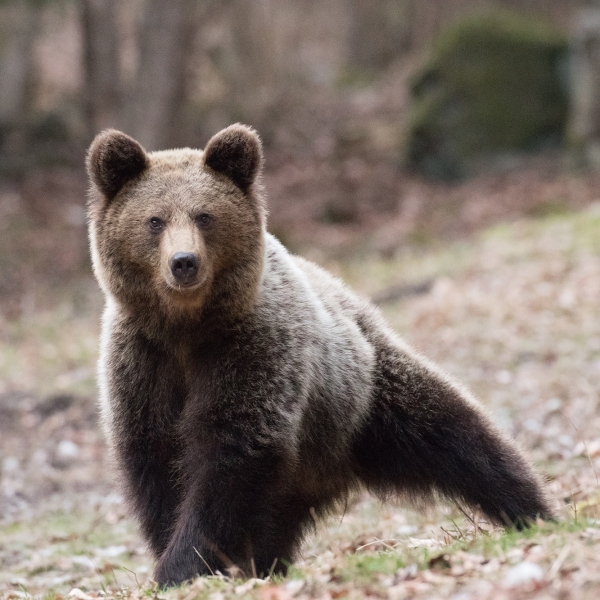
This afternoon a nice Brown Bear had visited the feeding place and attract us by its nice light brown, blonde color.

Last day newly arrived Thrush Nightingales gave us a morning concert and permits close view, than in Sanpaul wetland Ferruginous Ducks, White-winged Black Terns, Red-throated Pipits, Yellow Wagtails, Lesser Spotted Eagels, Black Stork and a scarce Saker Falcon enrich our daylist.

Yours sincerely,

Sakertour team

Spring 2012

From April Mountains of Transylvania slowly comes to life. Snow melting quickly every day and this time only present mostly in the nordic sides,  over 1300 meter high and above.  First half of April is about the preparation works before the first groups arrive. This means next box and territory controls for key species.

In the Békás Gorge, Wallcreepers are almost in full breeding plumage and ready for the breeding.  In a cold and rainy day some individuals come closer to the ground, probably to drink and after insects.  3rd week of April was mostly rainy and we were lucky to find a pair very low down.  It was an unforgettable experience watching these birds from 2-3 meter distance, in eye level!

 Male Wallcreeper in the Békás Gorge National Park (Photo: Zoltán Baczó)

2012 is not a breeding year for Ural Owls, at least in the pure beech forest of the Harghita, where our nest boxes were installed.

In the Southwest side of the Ghiurghiu Mountains were the most productive in terms of mountain species, compared to Harghita. We found 2 new territories of Three-toed Woodpecker and a singing/territorial Tengmalm`s Owl!  West of Transylvania, in Torockó all the known territories of Rufous-tailed Rock Thrush were already occupied. Males sing continuously and display over own territories to attract late arrival females.

 Rufous-tailed Rock Thrush (Photo: János Oláh)

Among wetlands of Transylvania Sanpaul fishponds is one of the most productive again. We already have 1 Citrine Wagtail observation from 15th April and this individual was the 2nd in this spring!

Immature male Citrine Wagtail at Sanpaul (Photo: János Oláh)

 Sanpaul wetland after sunset (Photo: János Oláh)

Every day new migrants arrive such as Red-footed Falcons, Lesser Spotted Eagles, Marsh Terns, Purple Herons, Ferruginous Ducks, Marsh Sandpipers, Yellow Wagtails…

We are looking forward for a very enjoyable spring again!

Yours sincerely,

Sakertour team

Autumn colors of Transylvania

Second part of October usually the best period to photograph color rich autumn landscapes in Transylvania.  In this season the weather was unusually dry and warm, practically no rain from August.  In many places the forests looked more brownish than yellowish, although we managed to find some lovely places with bright autumn colors.  During the nights the temperature goes regularly under zero Celsius therefore the deciduous woodlands looked amazingly nice, some tree species canopy turn even into red. The first snow fell in the first week of October and was still visible over 2000 m high peaks of the Carpathians.

The Bicaz Gorges-Hasmas Mountain National Park (Photo: © Joan Rocca)

Bucegi Natural Park    (Photo: Zoltán Baczó)

Piatra Craiului National Park  (Photo: © Joan Rocca)

Colors  (Photo: © Joan Rocca)

Beech forest in October  (Photo: Zoltán Baczó)

Rimetea`s colors  (Photo: Zoltán Baczó)

Together with our Spanish photo partner we reached our goals and hopefully in the next year’s landscape photography trips/workshops could starts in this mystic region!

Yours sincerely,

Sakertour team

One day on the Harghita Mountains

20th of September together with 4 British birdwatchers we spent a full day on the Harghita Mountain to find some special forest birds. The weather was excellent, sunny and little bit windy in the higher elevation.

We started the morning with roaring Red Deers around our accommodations than continued to reach the Three-toed Woodpeckers habitats as early as possible.  On the way we stopped several times and easily found feeding Nutcrackers, two Black Woodpeckers, a Dipper, several Grey Wagtails and a Ring Ouzel.

Birding just below the highest peak of the Harghita produced a single male Three-toed Woodpecker in short time. We saw it for a quite long time while feeding and preening just above our heads.  (Here the  Eastern “alpinus” subspecies live which has barred back – does it???)

Three-toed Woodpecker  (Photo: Paul Wilson/tour participant)

On the way down we were lucky to see a fine male Hazel Grouse just at the edge of the forest road.  We saw it  briefly first but later it flew across the road in front of our car. Brief but definetely tickable views of this rather shy bird!

Male Hazel Grouse   (Photo: Zoltán Baczó)

Other highlights of the day were 3 Crested Tits, 2 Hawfinches, 1 Firecrest, 1 Osprey above the nearby reservoir, 1 Great Grey Shrike and the 3rd Black Woodpecker of the day just flew overhead.

Crested Tit  (Photo: Paul Wilson/tour participant)

Later in the afternoon we have visited a bear hide where we saw 1 Brown Bear and 9 Wildboars. Next day we tried again the bears and this time we got very good views of 2 Brown Bears and a female Red Deer!

Carpathian Brown Bear in the Harghita  (Photo: Zoltán Baczó)

Yours sincerely,

Zoltán Baczó

Sakertour team

Two days in Transylvania

As a part of Carol`s birding trip to Eastern Europe 2 full days were spent in the end of June, in Transylvania. She previously visited Bulgaria and Hungary (Hortobágy National Park) and we mainly looked for birds which Carol not seen yet.  In this short report I focused mainly on these species.

First day morning we have visited the Harghita Mountains where we quickly saw some targets such as a single Three-toed Woodpecker, Crested Tit, Common Crossbills and a Nutcracker family.

Tree-toed Woodpecker in the Harghita Mountains  (Photo: Zoltán Baczó)

In the afternoon along the Homoród Valley we successfully observed a fine male Red-breasted Flycatcher, Lesser-Spotted Eagles  and unsuccessfully tried the White-backed Woodpecker. We finished the day with River Warblers, Garden Warblers, Thrush Nightingales and Corncrakes. The Corncrake site were amazing with at least 7-8 singing male of which we saw 2 birds well!

Second day we have visited the Gheorgheni basin  where we had excellent view of 2 male Common Rosefinch, 2 singing Grasshopper Warbler, several Fieldfares and a Great-Grey Shrike family with 4 fledgling youngsters.

In the way back to Odorhei we had an unexpected bonus, a Brown Bear! It was a young one, maximum 3 year old and just want to access through the road in front of our car.

Brown Bear  (Photo: Zoltán Baczó)

We finished the day with a female Grey-headed Woodpecker, Garden Warblers and Icterine Warbler.

Sakertour team

The first days of summer

In the first part of June I visited the Gheorgheni basin to find Transylvania`s one of the most colorful and localized breeding birdspecies, the Common Rosefinch. Romania`s main breeding population can found here along the upper section of river Mures wet meadow sites.

During my visit I have found 6-7 territorial males and 1 female as well. The males were very territorial and allow to make some picture from a pair.

Male Common Rosefinch   (Photo: Zoltán Baczó)

Female Common Rosefinch  (Photo: Zoltán Baczó)

Among others I have found a Common Snipe, which is most probably another localized breeding bird of the site. This species breeds in small number in the neighborhood Ciuc basin as well, along the upper section of river Olt.

The wet alpine, meadow fields of the Gheorgheni basin this time is covered by flowering  Meadow buttercup (Ranunculus acris) and create endless yellow carpet landscape, excellent habitats for Corncrakes.

Alpine meadow with Meadow buttercup (Photo: Zoltán Baczó)

A little bit south, along the Homorod Valley I spent some time to photograph European Bee-eaters near a colony site.

In the afternoon lights these birds looks amazingly colorful.

European Bee-eater      (Photo: Zoltán Baczó)

Close to the colony 4-5  Corncrake start singing in the afternoon. This year looks a bit exceptional because this species is present much widely in the suitable habitats than previous years.

Corncrake in the Homoród Valley  (Photo: Zoltán Baczó)

Other observed and interesting breeding birds of the area were Great Grey-, Lesser Grey- and Red-backed Shrike, Hoopoe, Icterine Warbler, Yellow Wagtail, Whinchat, Stonechat, Whitethroat, Lesser Spotted Eagle…

Xanthophrys type Yellow Wagtail with yellow supercilium (Photo: Zoltán Baczó)

Yours sincerely,

Sakertour team

Brown Bears in the Carpathians

Spring time, including late April is one of the best and most reliable period to see the magnificant Brown Bears of the Carpathians, where – in some part – they are still abundant. Though it is never easy to find one of these shy animals just by chance, so local knowledge is almost essential. In two evenings, this time we managed to see no less than five bears: two large and three smaller ones.

One of the bigger ones… (Photo: Simay Gábor)

and one of the smaller ones (Photo: Simay Gábor)

While one drives to the Carpathians in the surrounding and also on route there are of course a lot to see, and many interesting bird species can be met. Some of them just arrived in late April, or just started to sing, thus for many of them this is the peak activity period. A few examples of these species:

Rufous-tailed Rock Thrush (Photo: Simay Gábor)

Rock Bunting (Photo: Simay Gábor)

Ortolan Bunting (Photo: Simay Gábor)

Sakertour team

April in Transylvania

Central part of Transylvania is the coldest region of Romania, therefore the spring always late here.

This time of the year the higher peaks of the Carpathian Mountains still snow covered while in the lower altitude the forests start to become greener every day.

I have start to discover the lower regions and visit some interesting habitats after birds around Odorheiu  Secuiesc  and Sighisoara.

Unusual White Stork nest on a dead  tree top (Photo: Zoltán Baczó)

Sanpaul wetland in the Homorod Valley is one of the most important spot for waterbirds. I have observed in the second half of April amongst other the first Purple Herons, Black-crowned Night Herons, Bitterns, Little Crake, Hobbies, Whiskered Terns;  migrating Red-necked Grebe, Red-footed Falcons, Montagu`s Harrier, Mediterranean Gulls, Little Gulls, and different forms/hybrids of Yellow Wagtails.

On 26th of April appeared again an adult male Citrine Wagtail as well!

A friendly Black-crowned Night Heron  (Photo: Zoltán Baczó)

Some Lesser-Spotted Eagle is still in migration others already occupied their breeding territories.

Soaring Lesser-Spotted Eagle (Photo: Zoltán Baczó)

Pure beech forests of the Kalonda plateau is quite calm, Mistle Thrushes song continually, first Common Redstarts occupied their breeding territories but the most interesting event was that a pair of Ural Owl choose to use as a nesthole one of our artificial nestbox, tested successfully in the Zemplén Hills.

Mixed woodlands around Sighisoara with beech, oak, common hornbean and  wild cherry trees looks very different. This woodlands has the most active birdlife in this time.  I have observed 6 species of woodpeckers included a pair of White-backed Woodpecker which is a scarce species in Transylvania, Collared Flycatchers, Common Redstarts, Hawfinches and the first singing Wood Warbler in this year.

I have found here a pair of Ural Owl sunbathing in the tree crown. They were so relaxed and allow to observe from underneath without disturb their siesta.

Ural Owl (Photos: Zoltán Baczó)

Yours sincerely,

Zoltán Baczó

Winter bird count on the Carpathian lower Danube

We made our annual winter waterbird count from 4th to 6th February,  on the lower part (Carpathian Basin section) of the River Danube from Orsova  to Bazias, in Transylvania.

This ca.130 kilometer long stretch of Danube usually holds 25,000-30,000 waterbirds in winter. Numbers also depend on ice cover of the upper Danube sections (mainly in Hungary) as well as the weather generally.


View Larger Map

This year the count was only 18,459 waterbirds, of which the outstanding result was the record number of Smews. We counted a total 2,062 wintering birds of this lovely bird. The only species which was far less numerous as usual was the Coot. We only counted 1542 individuals which barely compares with the 8000+ last year though the water level of the Danube was very high!

The Kazán-pass along the Danube  (Photo: Zoltán Petrovics)

Smews in a mixed diving duck flock along the Danube (Photo: János Oláh)

Other highlights included a Bernacle Goose (very rare bird in Transylvania), 5 Scaup, 3 Velvet Scoter, 7 Red-breasted Merganser, 47 Goosander, Sombre Tits and several Cirl Buntings. The latter two species are rare and restricted breeding birds in the Carpathian Basin.

Velvet Scoters (Photo: Dániel Balla)

Male Cirl Bunting  (Photo: János Oláh)

Female Cirl Bunting  (Photo: János Oláh)

Yours sincerely,
Sakertour team